






Avoriaz celebrates its 60th anniversary The history of the resort
Discover the story of Avoriaz as it celebrates its 60th anniversary: from the pioneers of the 1960s to new snow sports, six decades of bold innovation in the heart of the Alps.

The origins of Avoriaz
Jean Vuarnet, Gérard Brémond and Jacques Labro envision a car-free resort designed around skiing. In the 1960s, their project brings a new way of experiencing the mountains to life.

From cinema to new snow sports
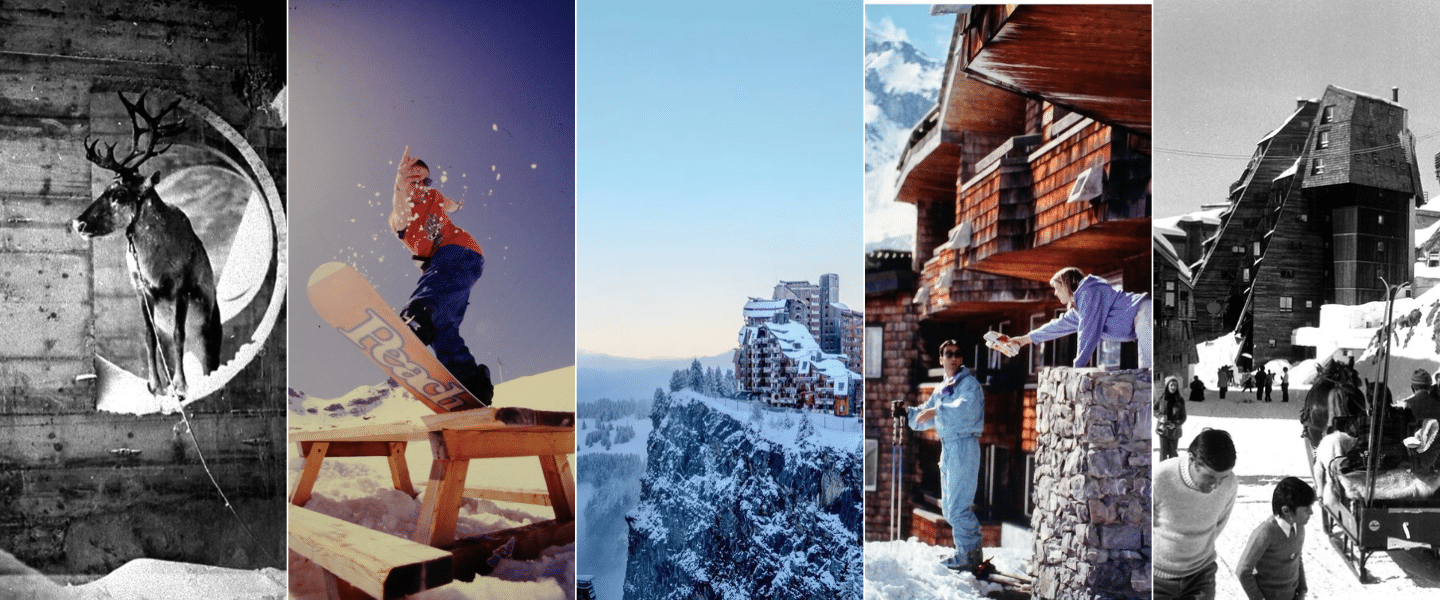
The Fantastic Film Festival, the Arare snowpark, the Stash… Over the decades, Avoriaz becomes a place for connection and experimentation, where cinema, winter sports and creativity come together.

A legacy of 60 years of bold innovation
In 2027, Avoriaz celebrates 60 years of history. Its snow-covered streets, organic architecture and snow sports culture reflect the bold choices of its founders. A living legacy, shared by the generations who bring the resort to life.
Avoriaz celebrates its 60th anniversary: a story of bold innovation, decade after decade
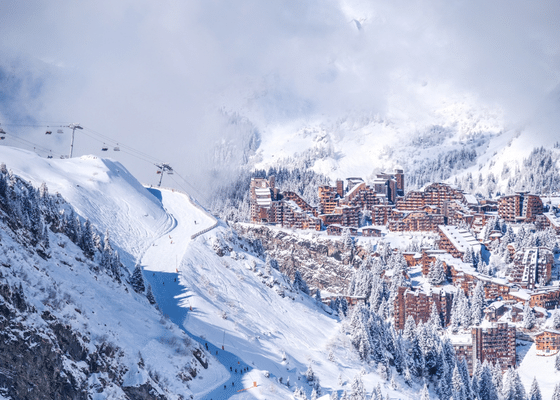
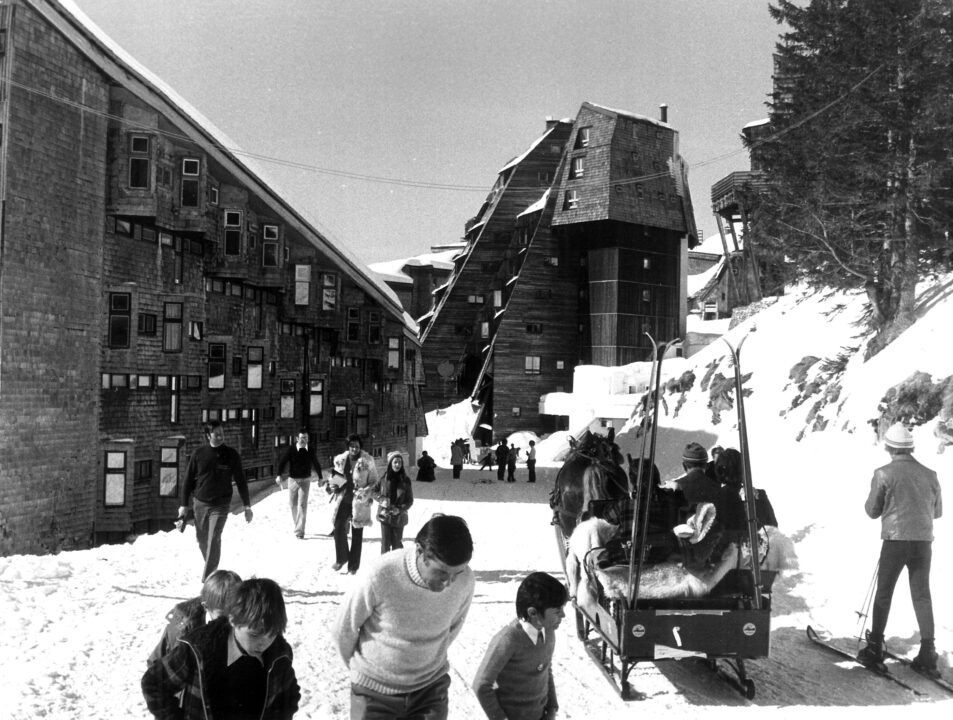
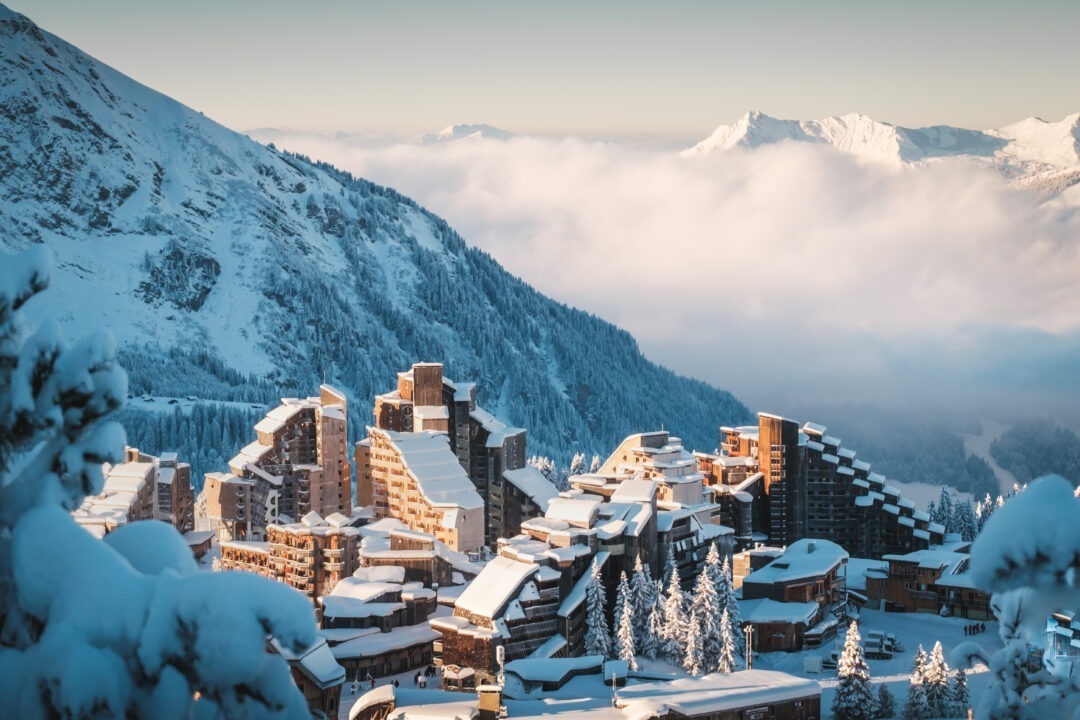
In 2027, Avoriaz celebrates its 60th anniversary. Its story is one of a bold vision brought to life: creating a car-free resort on an alpine plateau high above Morzine, where people ski along the streets and the architecture takes inspiration from the mountains. Since its earliest winters, this freedom to imagine has inspired projects as diverse as a fantastic film festival, new spaces for snow sports and a playful approach to learning to ski. Decade by decade, we look back at the ideas, encounters and bold ventures that have shaped Avoriaz.
The 1960s: the birth of Avoriaz
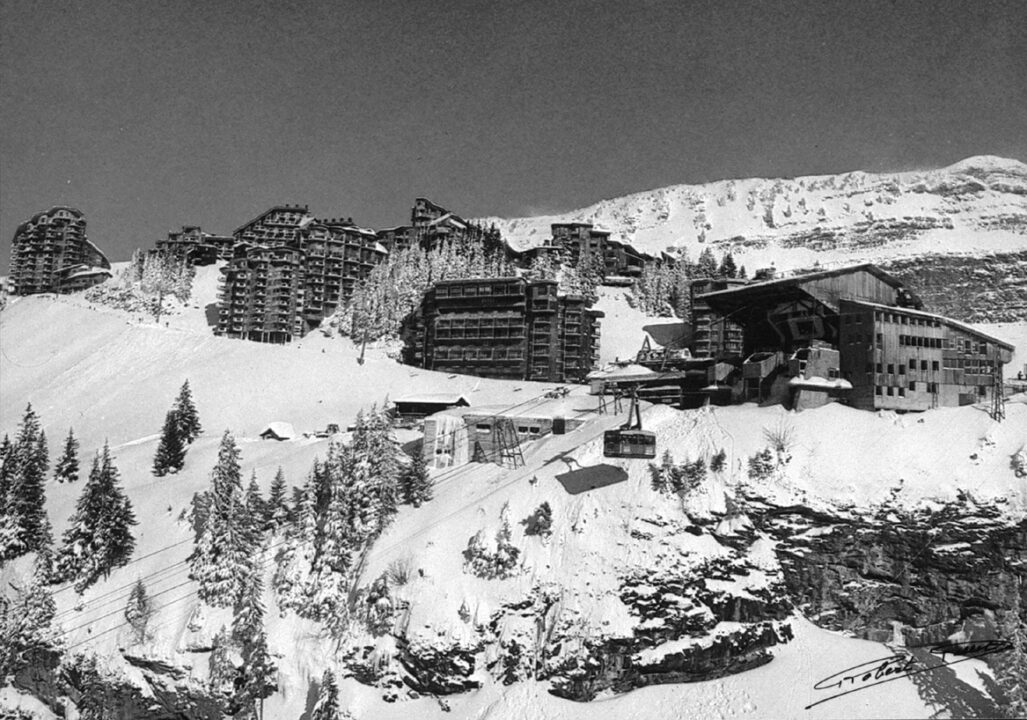
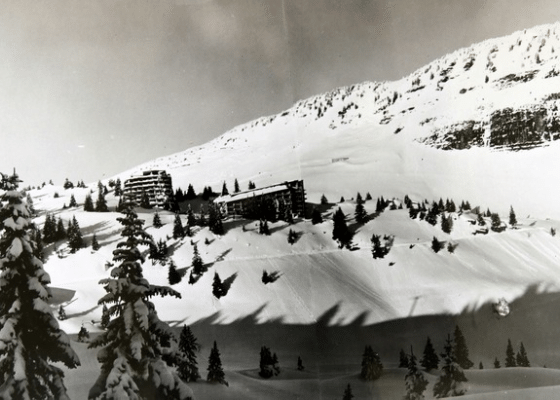
Before the ski lifts and holiday residences, the Avoriaz plateau was alpine pastureland. Once owned by the Counts of Rovorée, a family from the Chablais region, the land was transferred to the municipality of Morzine. Its name evolved over time: “Rovorée” became “Avorée”, then “Avoréaz”, before taking the name Avoriaz, in which the “z” is silent.
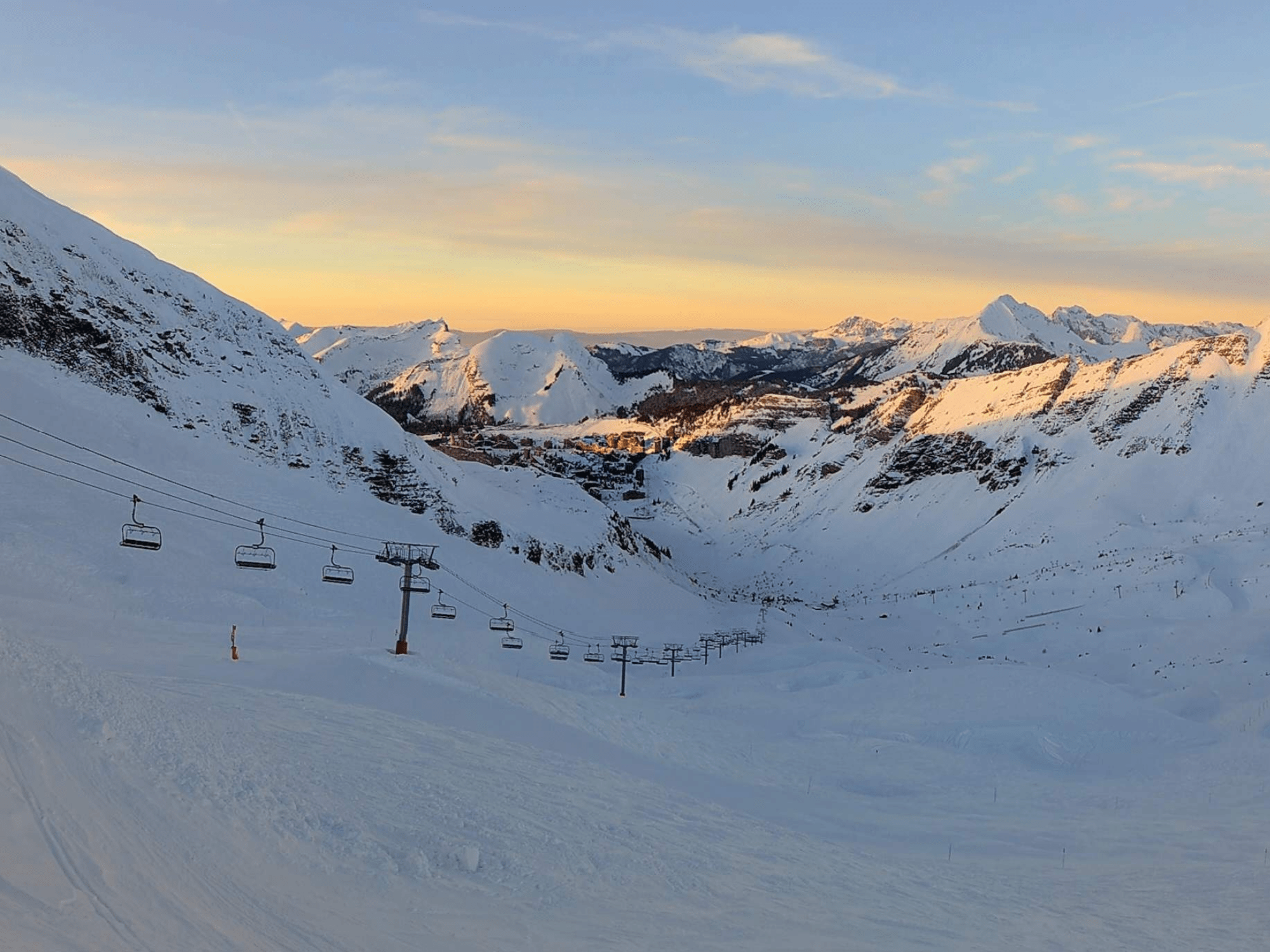
On this dry plateau with its poor soil, a handful of chalets sheltered herders who came up from the valley with their livestock in spring and returned in autumn. In the 1960s, this pastoral landscape was about to become the setting for a bold project.
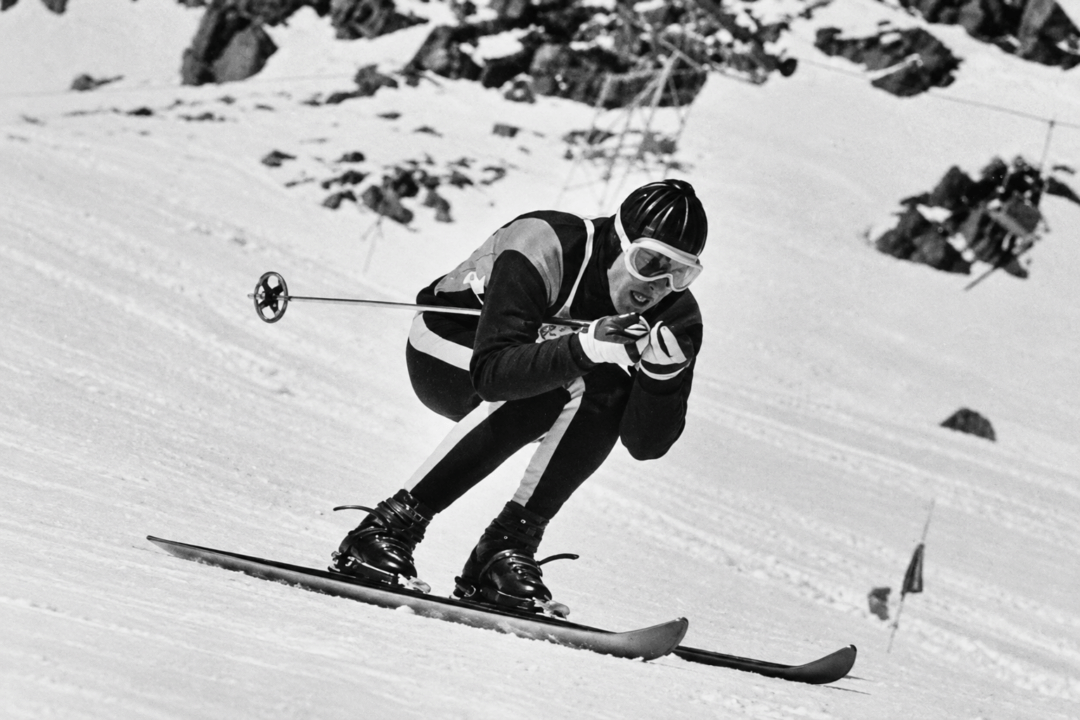
Jean Vuarnet, the 1960 Olympic downhill champion, championed the idea of a resort on these heights. Gérard Brémond and architect Jacques Labro, soon joined by Jean-Jacques Orzoni and Jean-Marc Roques, helped bring it to life. Their ambition was to create a car-free resort designed entirely around skiing, where getting around on snow would shape everyday life. The story of Avoriaz’s founders.
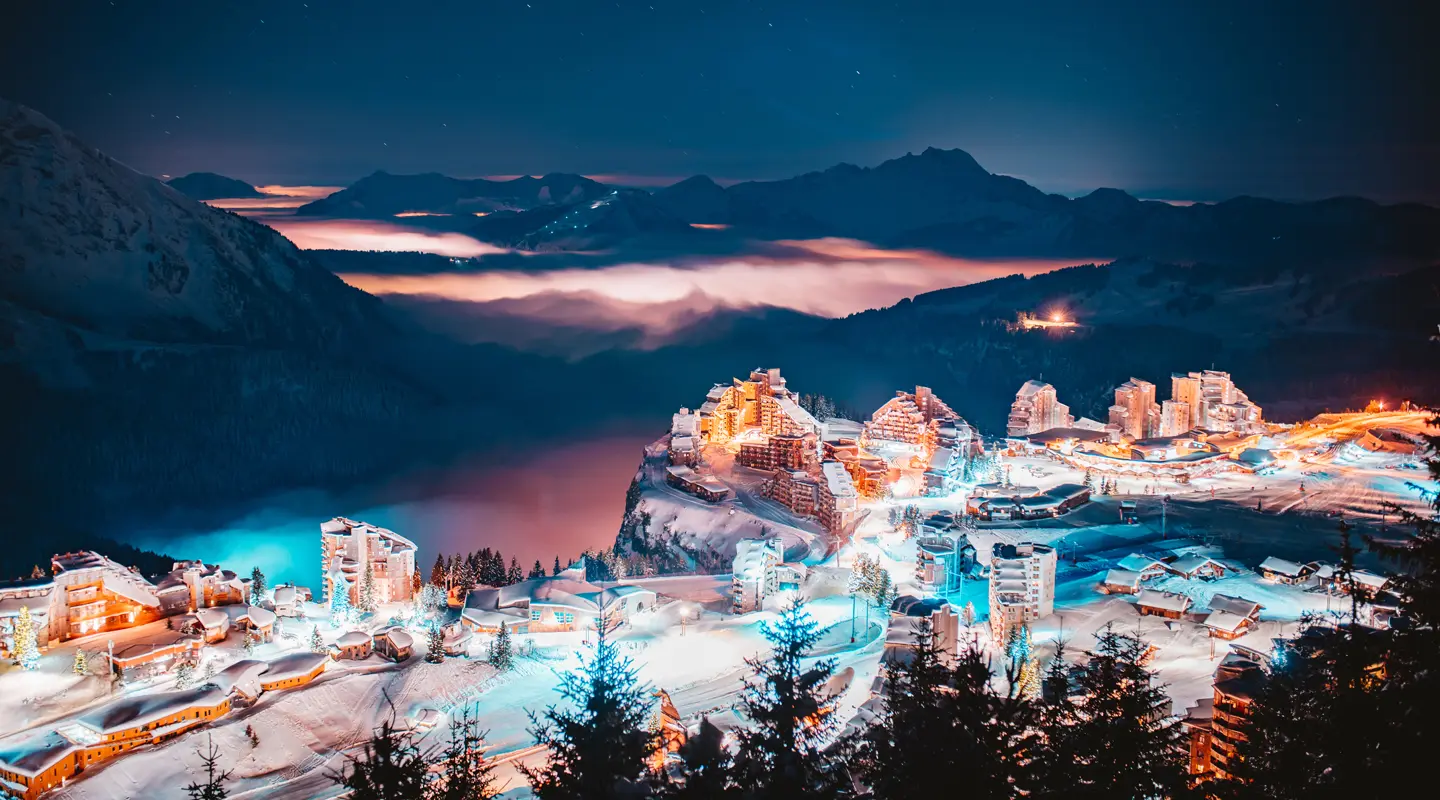
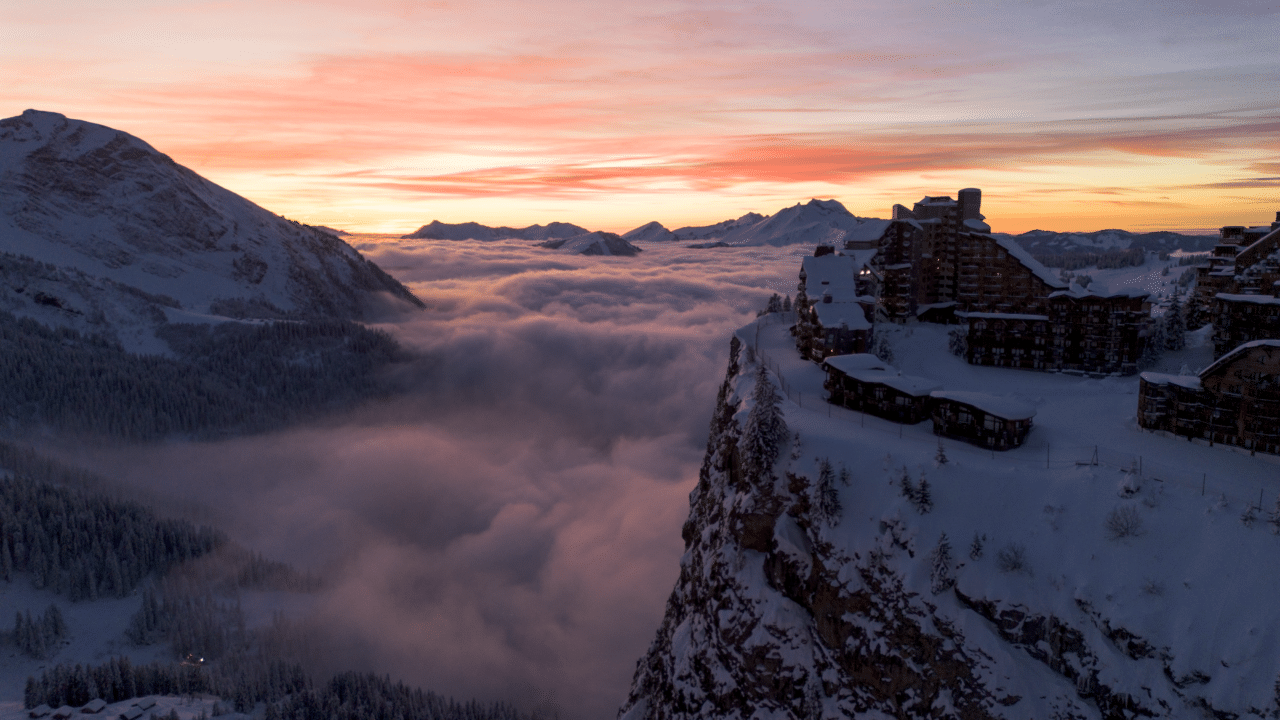
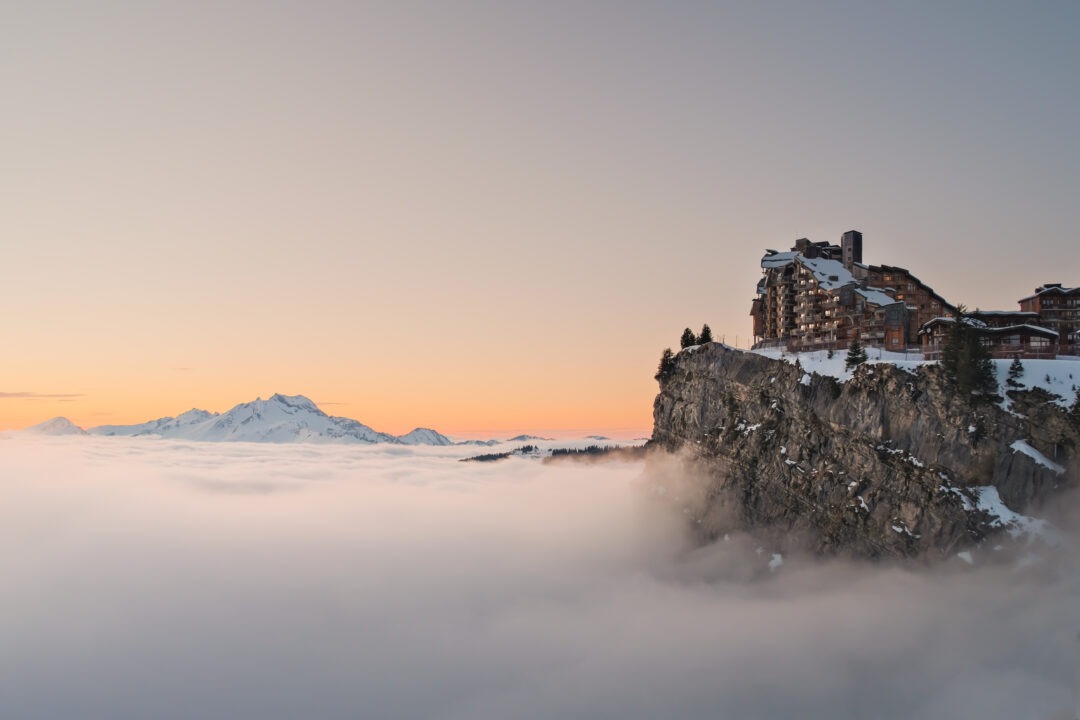
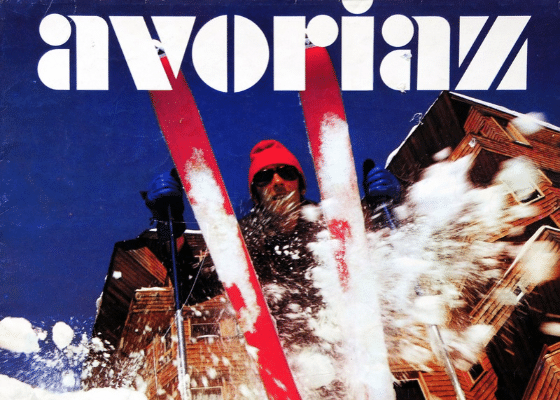
Architecture was central to this bold vision. Building forms echo one another without repeating themselves, rooflines follow the contours of the mountains, and wooden façades change with time. Known as “organic architecture”, this approach takes the landscape as the starting point for building design. It gives Avoriaz a distinctive silhouette, recognisable from afar. Avoriaz’s organic architecture.
The first holidaymakers arrived at Christmas in 1966. The winter of 1966–1967 thus marked the resort’s beginnings. Avoriaz was also the birthplace of Pierre & Vacances, founded in 1967 by Gérard Brémond: the group and the resort began their stories together.
The 1970s: fantastic cinema and holidays for children
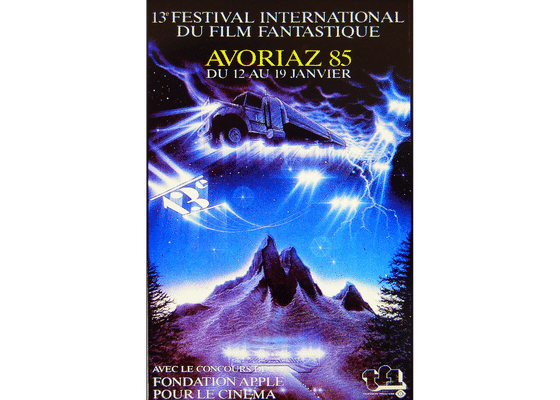
In 1973, Avoriaz hosts the first edition of its International Fantastic Film Festival. For the fledgling resort, the challenge is to become known beyond the skiing community. Gérard Brémond and Lionel Chouchan make a bold move: creating a film event capable of drawing journalists, artists and audiences high into the mountains.
The choice of the fantastic genre gives the festival a strong identity. With its distinctive buildings perched above the cliffs, Avoriaz provides a setting that seems to extend the imaginative worlds of the films being screened. At the very first edition, the Grand Prix goes to Steven Spielberg’s Duel. Cinema becomes a powerful way to introduce the resort to a wider audience: the celebrities and television crews who gather there help spread its name far beyond the slopes. The history of the Avoriaz Fantastic Film Festival.
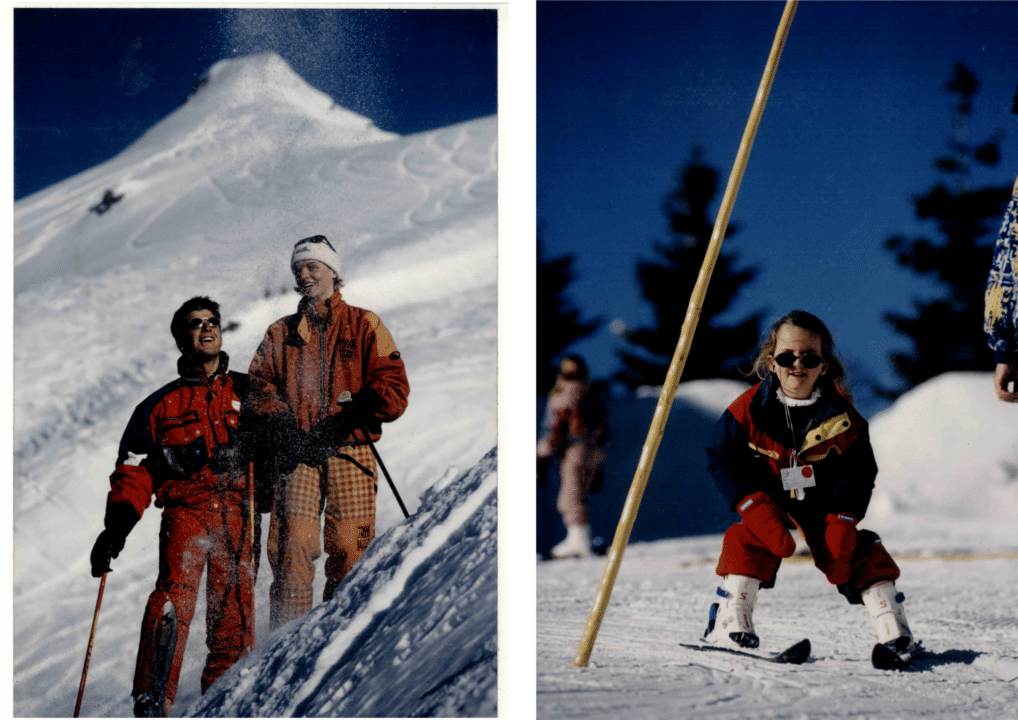
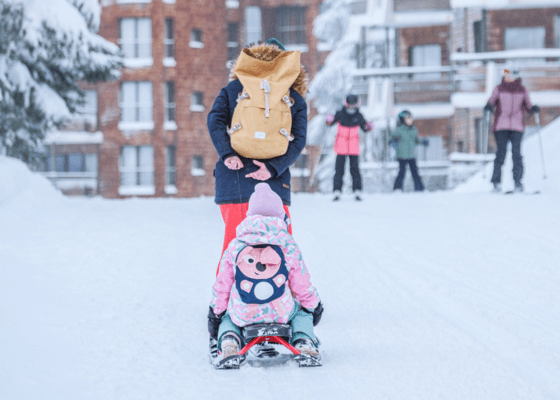
Two years later, in 1975, Annie Famose creates the Village des Enfants. The skiing champion puts play at the heart of learning to ski. Young holidaymakers now have a world designed just for them. These two initiatives broaden Avoriaz’s appeal: visitors come to ski, but also to discover films and enjoy family holidays.
The 1980s: Avoriaz, where fantastic cinema meets the stars
In the 1980s, the International Fantastic Film Festival builds on the bold venture launched in 1973. The name Avoriaz becomes associated with films that will leave a lasting mark on cinema. Its award winners include David Lynch’s The Elephant Man and Blue Velvet, as well as James Cameron’s The Terminator. This bold spirit also shapes the juries, where filmmakers and actors sit alongside figures from literature and music. Over successive editions, Serge Gainsbourg, Jane Birkin, Françoise Sagan and Johnny Hallyday take part in this meeting of the arts.
Amid this creative buzz, Avoriaz also strengthens its reputation as a celebrity destination. The resort’s appeal to the stars dates back to its earliest years: Brigitte Bardot is already a visitor to the plateau, while Johnny Hallyday and Natalie Wood try their hand at snowmobiling. Captured in photographs, articles and television coverage, these visits help make Avoriaz a fashionable destination even before the festival is created.
In the 1980s, cinema brings this fame to new heights. In January 1987, Johnny Hallyday attends the festival for Terminus, in which he plays the leading role. His visit generates interviews and news reports, reflecting Avoriaz’s place in the entertainment spotlight at the time.
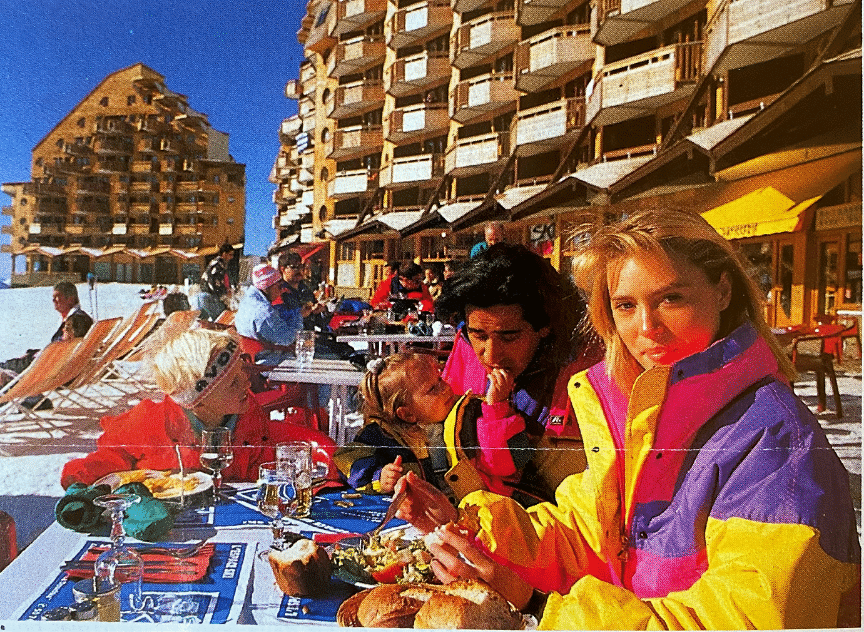
During the festival, screenings and encounters follow days spent on the slopes. Television crews set up their cameras high in the mountains, and the wooden façades become the backdrop for programmes broadcast across France. Avoriaz thus builds a dual reputation: as a distinctive ski resort and as a gathering place for leading figures from cinema and music.
The 1990s: the bold move to embrace new snow sports
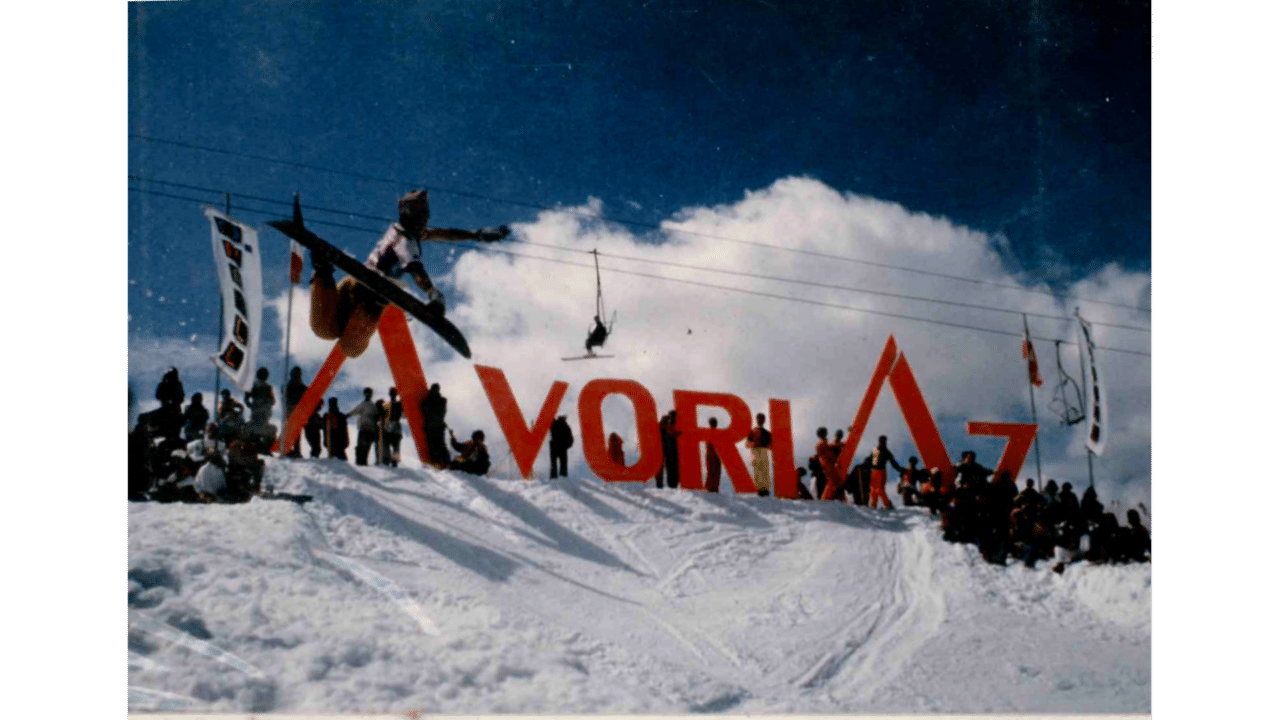
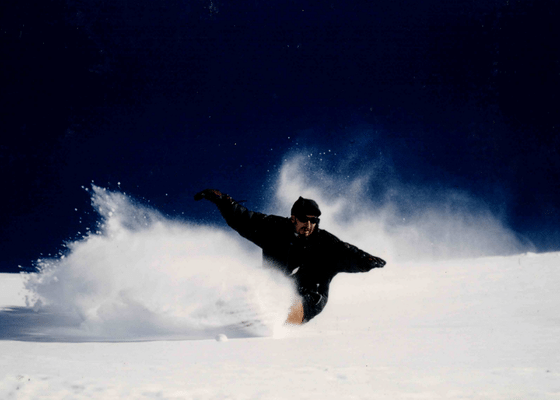
In 1993, the International Fantastic Film Festival holds its final edition in Avoriaz. After twenty years, a chapter closes for an event that played a major role in putting the resort on the map. On the slopes, another adventure is gathering momentum: snowboarding and freestyle, opening up new ways to experience the mountains.
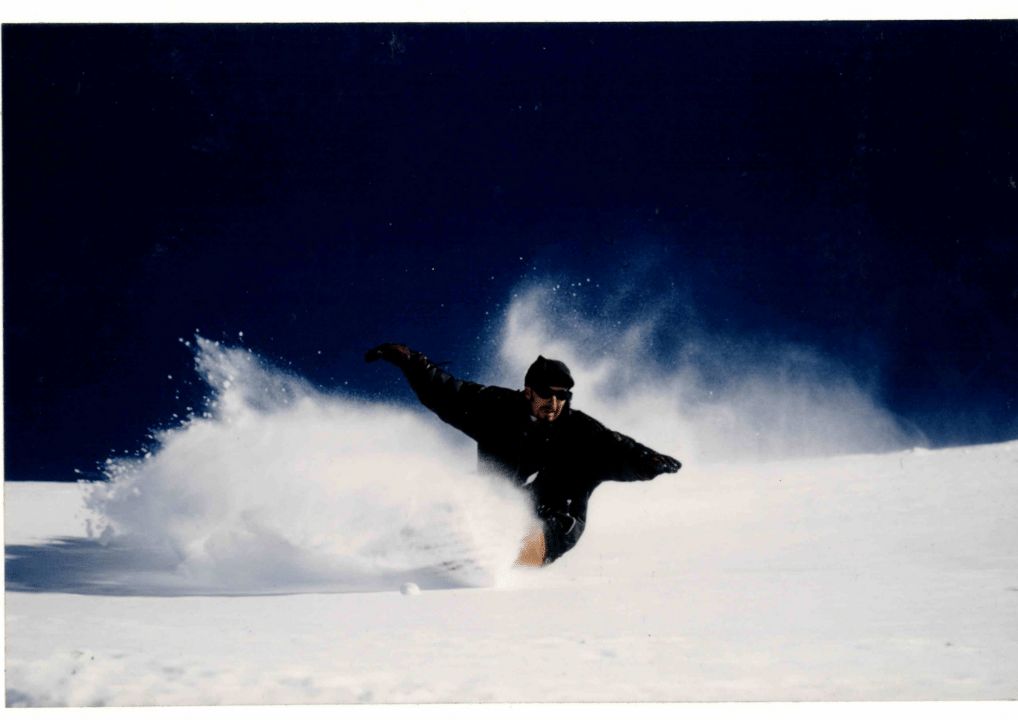
These sports bring a fresh perspective to the snow. A slope becomes a space for self-expression, a bump invites a jump, and a feature in the terrain inspires a trick. Alongside the thrill comes the pleasure of finding your own lines and the desire to progress together. This snow sports culture echoes the spirit of Avoriaz, where experimentation has been part of the resort’s story from the very beginning.
In 1993, this openness takes shape with the creation of the Arare snowpark, described by the resort as France’s first permanent snowpark. At a time when snowboarding and freestyle are still gaining ground, dedicating a space to them is a bold decision. Avoriaz gives them a place of their own within its ski area and invests in features designed for jumps and tricks.
With Arare, the resort responds to changing expectations: for these riders, the mountains are also a playground where they come to experiment, watch others and refine their style. The snowpark becomes a place to progress and connect. Avoriaz’s boldness lies in recognising the potential of these emerging sports and giving them room to grow.
Now known as Nami Park, the Arare snowpark continues this spirit of experimentation. Its name, meaning “wave” in Japanese, evokes surf-inspired shapes, with large waves of snow and original features. This evolution carries forward the decision made in the 1990s: to make room for creativity and let new generations reinvent the way they ride.
The 2000s: the Stash, a new way to ride through the forest
In the 2000s, experimentation continues in the Lindarets forest. In 2006, the ski lift company (SERMA) creates the Biotop, an area combining natural terrain with wooden features.
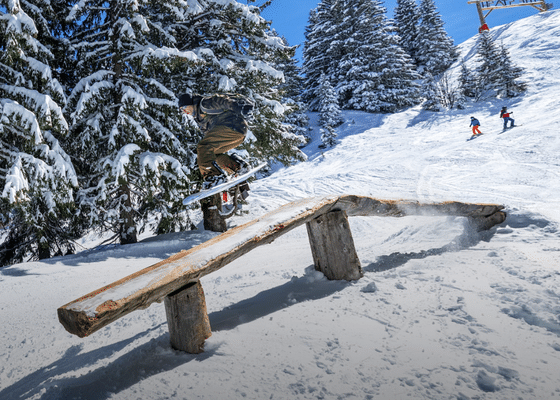
In 2008, this approach evolves with the Stash, developed in partnership with Burton. The course combines freestyle and freeride: riders play with the terrain and discover features as they descend through the trees. The forest becomes part of the riding experience.
With its trails and wooden features, the Stash in Avoriaz gives fresh expression to an idea rooted in the resort’s beginnings: designing facilities around the landscape they inhabit.
The 2010s: new facilities to reimagine mountain holidays
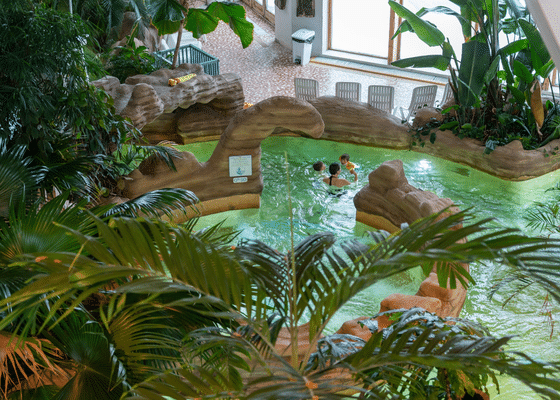
In 2012, Avoriaz continues its tradition of bold projects with the opening of Aquariaz. At an altitude of 1,800 metres, this 2,400 m² water park brings a tropical world to the heart of the resort. A gentle current carries swimmers along a river winding through the plants, while pools and play areas offer families a new way to enjoy their holiday.
Younger children discover the water games and paddling pool, while thrill-seekers take to inflatable tubes on the Slidewinder, a half-pipe attraction. A climbing wall above the water and an outdoor hot tub with mountain views complete the experience. Aquariaz broadens the holiday possibilities with a place to come together, get active or unwind, in both winter and summer.
The following year brings a major change to access from the valley. In April 2013, the new Prodains Express 3S cable car opens, following construction work that began in spring 2012. It replaces the original installation, modernising an essential link between the hamlet of Les Prodains, at the foot of the cliffs, and Avoriaz.
Using three-cable technology, the new lift combines speed with increased passenger capacity. The journey takes around four minutes, offering an alternative to the winding road from Morzine. For day skiers and holidaymakers travelling to the resort, this connection makes the plateau easier to reach while preserving a spectacular arrival high above the valley. The original stations are retained after the first cable car is dismantled, keeping a visible link with the site’s history.
With Aquariaz and the Prodains Express, the 2010s carry forward two of Avoriaz’s founding ambitions: imagining new mountain experiences and making life easier in a car-free resort.
The 2020s: a recognised heritage and 60 years to celebrate
Over time, Avoriaz’s earliest buildings take on new significance: they bear witness to a distinctive chapter in the history of architecture and mountain tourism.
On 18 February 2025, the Les Hauts-Forts 2 building is listed as a historic monument. Built between 1967 and 1968, it illustrates the architectural exploration of the resort’s early years. This protected status invites visitors to take a fresh look at the buildings they pass every day. Les Hauts-Forts 2, a protected heritage site.
In 2027, Avoriaz’s 60th anniversary will offer an opportunity to rediscover this history through its landmarks, archives and the memories of those who lived it. From the earliest holidays to successive generations of skiers, the adventure is also passed down through families.
For announcements and events throughout the anniversary year, visit the Avoriaz 60th anniversary page.